
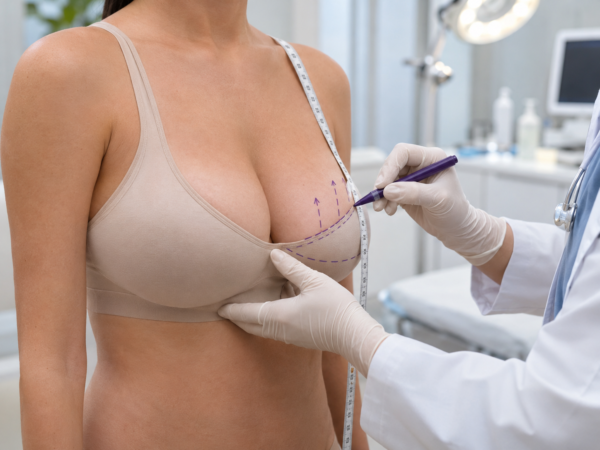
Breast Reduction Surgery in Jordan: A Complete Guide to Benefits, Recovery, and Results
Breast reduction surgery is a procedure that can improve physical comfort, body proportions, and everyday quality of life for women experiencing difficulties associated with overly large breasts.
While breast augmentation focuses on increasing breast size, breast reduction surgery, medically known as reduction mammaplasty, removes excess breast tissue, fat, and skin to create smaller, lighter, and more proportionate breasts.
For many women, the decision to undergo breast reduction is not simply cosmetic. Large breasts can contribute to persistent neck, shoulder, and back discomfort, difficulty exercising, skin irritation, and limitations in daily activities.
At Dr. Mutaz Al Shakhanbeh Clinic in Amman, Jordan, breast reduction surgery is an available treatment option for women seeking to address these concerns through an individualized surgical approach.
This guide explains the procedure, its potential benefits, who may be a suitable candidate, recovery expectations, and important considerations before deciding on surgery.
What Is Breast Reduction Surgery?
Breast reduction surgery, also called reduction mammaplasty, is a surgical procedure designed to reduce breast volume while improving breast shape and position.
During the operation, the surgeon removes selected amounts of excess glandular tissue, fatty tissue, and skin. The remaining tissue is then reshaped to achieve a breast size and contour that better suits the patient’s anatomy and preferences.
Depending on the technique, the nipple and areola are often repositioned to create a more balanced appearance.
The goal is not necessarily to achieve the smallest possible breast size. Instead, the surgeon aims for proportions that reflect the patient’s body structure, comfort, and desired outcome.
Why Do Women Consider Breast Reduction?
Women may consider breast reduction for a variety of physical, functional, and personal reasons.
1. Neck, Shoulder, and Back Discomfort
The weight of large breasts may contribute to ongoing strain or discomfort in the neck, shoulders, and upper back.
For appropriately selected patients, breast reduction can help relieve symptoms associated with excessive breast weight.
However, not every case of back or neck pain is caused by breast size, and other medical explanations should be considered during evaluation.
2. Difficulty Exercising
Large breasts can make certain physical activities uncomfortable, including running, aerobics, and other high-impact exercises.
Reducing breast volume may make movement more comfortable and allow some patients to participate more easily in physical activities.
3. Skin Irritation Beneath the Breasts
Some women experience recurring irritation, moisture-related rashes, or discomfort in the fold beneath the breasts.
These problems can become more noticeable in warm weather or during physical activity.
4. Shoulder Grooves From Bra Straps
Heavy breasts may place additional pressure on bra straps, leaving indentations or causing shoulder discomfort.
5. Clothing and Body Proportions
Some patients find it difficult to choose clothing or supportive bras that fit comfortably.
Breast reduction may help create proportions that feel more balanced with the rest of the body.
6. Personal Confidence and Comfort
A woman’s relationship with her body is personal. Some patients seek breast reduction because their breast size affects how comfortable they feel in clothing, physical activities, or everyday situations.
The decision should always reflect the patient’s own preferences rather than external pressure.
Who Is a Good Candidate for Breast Reduction Surgery?
Breast reduction may be appropriate for women who experience persistent discomfort or functional difficulties associated with large breasts.
Potential candidates generally include women who:
- Experience physical symptoms associated with excessive breast weight.
- Have difficulty participating in certain activities.
- Experience recurring irritation beneath the breasts.
- Want a smaller breast size and more balanced proportions.
- Are in suitable general health for surgery.
- Have realistic expectations about results and scars.
- Understand the recovery process and potential complications.
Ideally, breast development should be complete before surgery. In selected circumstances, however, younger patients may also be considered following specialist assessment.
Is Breast Reduction Suitable for Everyone?
No. Breast reduction is not appropriate for every patient.
The decision depends on overall health, breast anatomy, current symptoms, future plans, and individual risk factors.
Surgery may need to be postponed or reconsidered for patients who:
- Have uncontrolled medical conditions.
- Smoke or use nicotine and are unable to follow cessation guidance.
- Have medical factors that increase the risk of poor wound healing.
- Are planning significant weight loss.
- Are pregnant or currently breastfeeding.
- Are planning future pregnancies and are concerned about potential effects on breastfeeding.
- Are unwilling to accept permanent surgical scars.
These considerations do not automatically exclude every patient. A personalized medical assessment is necessary.
How Is Breast Reduction Surgery Performed?
Breast reduction is generally performed under general anesthesia in a hospital or appropriately equipped surgical facility.
The exact technique depends on the patient’s breast size, degree of sagging, skin quality, and desired reduction.
Step 1: Consultation and Surgical Planning
Before surgery, the surgeon evaluates breast anatomy, medical history, medications, and treatment goals.
Breast measurements, photographs, and imaging may be requested when appropriate.
The planned breast size, incision pattern, possible scars, and limitations of the procedure should be discussed.
Step 2: Surgical Incisions
Different incision patterns may be used, including:
Around the areola: An incision surrounding the darker skin around the nipple, sometimes combined with other incisions.
Vertical or lollipop pattern: An incision around the areola extending vertically toward the breast crease.
Inverted-T or anchor pattern: An incision around the areola, vertically downward, and along the fold beneath the breast.
The appropriate pattern depends on how much tissue must be removed and reshaped.
Step 3: Removing Excess Tissue
Selected amounts of breast tissue, fat, and skin are removed to reduce volume and weight.
In some cases, liposuction may be used as an additional technique.
Step 4: Reshaping the Breasts
The remaining tissue is reshaped, and the nipple–areola complex is commonly repositioned while preserving its blood supply.
The surgeon aims to achieve improved proportions and reasonable symmetry.
Perfect symmetry cannot be guaranteed.
Step 5: Closing the Incisions
The incisions are closed, and surgical dressings are applied. A supportive surgical bra is commonly recommended during recovery.
Breast Reduction vs. Breast Lift: What Is the Difference?
Although the procedures may appear similar, they have different primary objectives.
Breast reduction removes tissue to decrease breast volume and weight, while also reshaping and lifting the remaining breast.
Breast lift (mastopexy) primarily addresses sagging and nipple position without necessarily producing a substantial reduction in breast size.
For women whose main concern is heaviness and excessive breast volume, reduction surgery may be more appropriate.
For women satisfied with their breast size but concerned about sagging, a breast lift may be considered.
A consultation helps determine the appropriate procedure.
What to Expect During Breast Reduction Recovery
Recovery differs from one patient to another based on the extent of surgery, health status, healing response, and daily activities.
First Week
During the initial days, patients may experience:
- Swelling and bruising.
- Tenderness or discomfort.
- Temporary limitations in arm movement.
- Fatigue.
- The need for assistance with certain everyday activities.
Surgical dressings and a supportive bra may be used.
Patients should take prescribed medication and follow their surgeon’s instructions.
Weeks 2–3
Many patients begin feeling more comfortable and may return to desk-based work, depending on their recovery.
Physical activity remains restricted, especially exercise that strains the chest or involves heavy lifting.
Weeks 4–6
Swelling generally continues to decrease.
Some patients may gradually resume more physical activities after receiving approval from their surgeon.
Strenuous exercise and heavy lifting are commonly restricted for approximately four to six weeks, although individual instructions may differ.
Following Months
Breast shape continues to settle, residual swelling decreases, and scars gradually mature.
The final appearance may take several months to become clearer.
Will Breast Reduction Leave Scars?
Yes. Breast reduction surgery requires incisions and results in permanent scars.
Their location and extent depend on the surgical technique used.
Although scars generally fade and soften over time, they do not disappear completely.
Scar appearance can be influenced by skin characteristics, wound healing, smoking, incision tension, and individual biological factors.
Patients should discuss expected scar locations and postoperative scar care with their surgeon before surgery.
Can You Breastfeed After Breast Reduction?
Breastfeeding may still be possible after breast reduction, but the procedure can reduce milk production or make breastfeeding more difficult.
The effect depends on the amount of tissue removed, the surgical technique, and whether important ducts, nerves, and glandular structures are preserved.
Some women breastfeed successfully following reduction surgery, while others may produce insufficient milk.
For women planning future pregnancies, discussing breastfeeding goals before surgery is especially important.
Can Breast Size Increase Again After Surgery?
Breast reduction usually produces long-lasting changes, but breast size and shape may change over time.
Possible contributing factors include:
- Significant weight gain or loss.
- Pregnancy.
- Hormonal changes.
- Aging.
- Changes in skin elasticity.
Maintaining a relatively stable weight can help preserve the outcome, although it cannot prevent every future change.
What Are the Possible Risks of Breast Reduction?
Like any major operation, breast reduction carries potential risks.
These may include:
- Bleeding or hematoma.
- Infection.
- Reactions to anesthesia.
- Delayed or poor wound healing.
- Fluid accumulation.
- Breast asymmetry.
- Changes in nipple or breast sensation.
- Permanent visible scars.
- Difficulty or inability to breastfeed.
- Blood clots.
- Fat necrosis.
- Dissatisfaction with the final shape.
- The possibility of additional surgery.
Rare but serious complications include partial or complete loss of nipple–areola tissue.
The likelihood of complications varies between patients. Individual risks should be reviewed in detail before surgery.
How Should You Prepare for Breast Reduction Surgery?
Preparation typically includes a medical consultation and evaluation.
The surgeon may recommend:
- Reviewing existing medical conditions and medications.
- Completing blood tests or breast imaging when indicated.
- Stopping smoking and nicotine use according to medical instructions.
- Adjusting medications that could affect bleeding, only under medical supervision.
- Arranging transportation and help during the early recovery period.
- Preparing comfortable clothing and postoperative support garments.
Patients should also discuss their ideal breast size, acceptable scarring, future pregnancy plans, and expectations regarding breastfeeding.
Breast Reduction Surgery in Amman, Jordan
For women considering breast reduction surgery in Jordan, selecting an appropriately qualified plastic surgeon and undergoing a thorough consultation are important steps.
At Dr. Mutaz Al Shakhanbeh Clinic in Amman, breast reduction is among the surgical procedures offered.
The clinic’s approach includes evaluating the patient’s medical history and breast anatomy, discussing the desired size and shape, and determining the appropriate surgical plan.
A personal consultation helps clarify whether breast reduction is suitable and what improvements can realistically be expected.
Frequently Asked Questions
Is breast reduction only a cosmetic operation?
No. Although it changes appearance, breast reduction may also address physical symptoms such as discomfort, skin irritation, and activity limitations associated with large breasts.
How long does breast reduction surgery take?
The clinic lists an approximate operating time of three hours, but the actual duration can vary depending on the individual procedure.
Is breast reduction painful?
Discomfort, tenderness, and swelling are expected after surgery. Pain management and recovery vary from patient to patient.
How long should I take off work?
Some patients return to less physically demanding work after approximately two to three weeks, while others need more time.
Will my breasts be perfectly symmetrical?
The surgeon aims to improve symmetry, but minor differences can remain because natural breast anatomy and healing are not identical on both sides.
Can I undergo breast reduction before pregnancy?
Yes, in selected cases. However, future pregnancy may change breast size or shape, and surgery may affect breastfeeding ability.
Is breast reduction a weight-loss procedure?
No. Breast reduction is intended to address breast volume and shape, not overall body weight. It should not be viewed as a substitute for weight management.
How much does breast reduction surgery cost in Jordan?
Pricing depends on the complexity of surgery, hospital and anesthesia charges, and individual treatment requirements. A personalized consultation is necessary for an accurate quotation.
Conclusion
Breast reduction surgery can offer meaningful improvements in comfort, mobility, and breast proportions for appropriately selected patients.
However, the decision requires careful consideration of surgical risks, permanent scars, healing time, possible effects on breastfeeding, and long-term expectations.
For women considering breast reduction surgery in Jordan, consultation with Dr. Mutaz Al Shakhanbeh can help determine whether the procedure is appropriate and establish an individualized treatment plan.